


The Evolution of Tame Impala
In the past decade or so, there has been a growing psychedelic rock movement coming out of both Australia, and here in the UK. Many of these bands are using synthesisers and reverberation to bring psych-rock into the 21st century, and others are keeping their music stripped down to commemorate the pioneers of the movement such as Pink Floyd, The Beatles, and The Beach Boys. The band undoubtedly at the forefront of its revival is the recording project of Australian multi-instrumentalist Kevin Parker, better known as Tame Impala. In light of their third record, here’s a look at how they’ve evolved and how each of their albums has shaped them into the leaders of modern psychedelia.
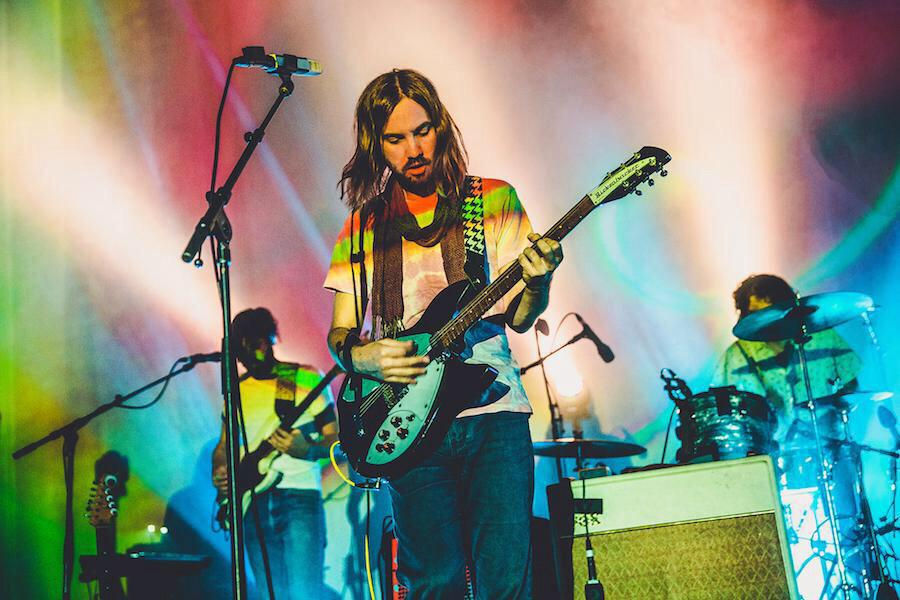
Photo: Press
Innerspeaker (2010):
Tame Impala’s debut very much showcased Parker’s John Lennon-like vocals more than any other. So too did it show off the sheer brilliance of their riff-writing, with garage rock showing a blatant influence on tracks like “Lucidity” and “Desire Be Desire Go”. Despite this album being a huge throwback to Revolver-era Beatles, they definitely move into their own style when it comes to the lyricism. The lonesome lyrics of “Solitude Is Bliss” very much make it a youth anthem, which is backed by harsh drumming and a crescendo synth beat. This album doesn’t stray too far from the psychedelic rock of the 60s and 70s but shows signs for movement in the releases to come.
Lonerism (2012):
Their most critically acclaimed LP to date, most notably winning NME’s album of the year. Kevin Parker’s production ability reached exceptional new levels, they were able to conjure up radio-friendly singles such as “Feels like We Only Go Backwards” and “Elephant”, while also maintaining the ability to write songs which put their fans in a dream state like “Mind Mischief”. They dabbled more in synthesiser-based music in this LP than their last, but were still in a transition period. If it was their debut which put them on the map, it was Lonerism which got them into the A list.
Currents (2015):
Prior to this release, Kevin Parker said in an interview that he’d never heard Tame Impala songs played in places where you’re meant to dance, and he wanted that to change. Electronics and post-production played a huge role in this album, more than ever before. The opener, “Let It Happen” possesses elements of EDM within it, while still holding on the core parts of psych-rock which built up their fanbase. Similarly, tracks like “Eventually” and “The Moment” use a lot of reverb, which really shows Tame Impala’s versatility when it comes to how they want to experiment with their music. With the lack of harsh guitar riffs in this album, it may not be the most accessible, but it is undeniably the best-produced and best-written LP that they have released. Through these albums, Tame Impala have cemented themselves as the true leaders of modern psychedelic rock.
Comments